
SolutionsAsset Reliability
Asset Reliability & Condition Monitoring
Asset Reliability — Better evidence for maintenance decisions.
Equipment condition monitoring becomes more useful when the information supports a specific maintenance or operating decision.
AxioIX combines physical measurements, operating context, analytical methods and engineering expertise to investigate equipment behaviour and identify information that can improve maintenance planning.
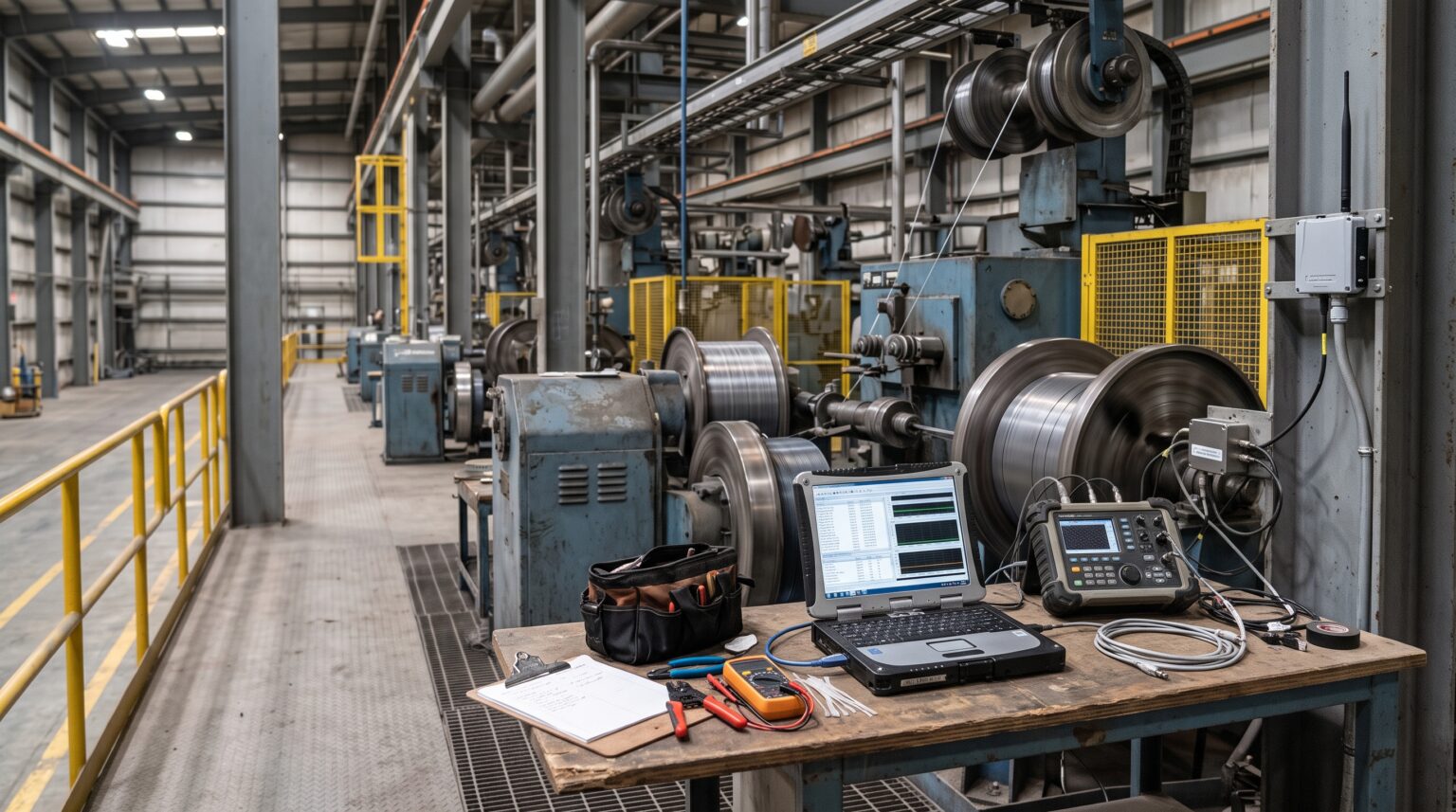
Reliability requirements
Start with the failure concerns that matter.
Reliability work begins with understanding the equipment, how it is used and which failures carry real consequences. The monitoring approach for a critical pump with no standby is different from that for a duplicated fan.
- Failure concerns
- Which failure modes have occurred, or are feared, and what do they cost?
- Current practice
- What inspections, measurements and maintenance strategies are already in place?
- Decision needed
- What would the maintenance team do differently with better information?
Physical condition evidence
Measurements chosen for the behaviour that matters.
Vibration is often central to understanding rotating equipment, but it is rarely the only useful measurement. Temperature, speed, load, current and process conditions can each help explain what the equipment is experiencing.
AxioIX selects measurements and their level of detail according to the failure concerns being addressed, using existing instrumentation, AxioIX sensing products or suitable third-party equipment.
Operating context
Is the equipment changing, or is the operation?
A change in vibration or temperature does not always mean the equipment is deteriorating. Changes in load, speed, duty, flow or process conditions can produce similar effects.
Interpreting condition evidence alongside operating context helps distinguish genuine equipment change from normal operating variation, reducing both missed problems and unnecessary interventions.
Context first. Condition information that ignores operating state can mislead. AxioIX treats operating context as part of the evidence, not an afterthought.
Investigation and monitoring
From investigation to a useful monitoring arrangement.
Diagnosis
Investigation and diagnosis
Requirements
Monitoring requirements
Warning
Useful warning intervals
Response and verification
Information that leads to action, and action that is checked.
Condition information is useful when it fits the way maintenance teams plan and respond. AxioIX considers who receives the information, what responses are possible and how they fit existing maintenance processes.
After an intervention, monitoring helps verify whether the response resolved the problem, and the findings improve future interpretation.
Illustrative example. On a variable-speed pump, overall vibration rises over several weeks. An increase in vibration is not automatically evidence of a developing fault: its meaning depends on the equipment, operating conditions, measurement characteristics and historical behaviour. If the rise follows changes in speed or load, continued observation may be enough. If it persists under comparable operating conditions, and is accompanied by changes such as bearing-related frequency content or temperature, a planned inspection may be justified. The inspection finding is then recorded to improve later interpretation.
Relevant applications
Where reliability evidence is commonly needed.
Typical equipment includes:
Pumps
Motors and drives
Compressors
Fans and blowers
Gearboxes and rotating equipment
Supporting plant
Development and deployment
From investigation to repeatable monitoring.
Some reliability questions are answered by a focused investigation. Others justify continuing monitoring, and a dependable arrangement then depends on reliability-specific choices:
- Measurement locations close to the components whose failure modes matter, such as bearings, gear meshes or couplings.
- Operating context and baseline: how the equipment normally behaves across its range of speed, load and duty.
- Fault evidence and validation: inspection and maintenance findings used to confirm what the indicators actually reflected.
- Monitoring continuity: data availability, sensor health and changes to the equipment or its configuration.
- Alert relevance and response: who receives an indication, what they can do about it and whether it arrives early enough to matter.
The monitoring may use existing instrumentation, AxioIX sensing products or, for larger asset populations, the reusable USP and rfFlux foundations, extended for the application.
How AxioIX moves from an initial question to a proven application is described on How We Work.
Discuss an equipment reliability challenge.
Tell us about the equipment, the failures that concern you and the decisions your maintenance team needs to make.