
IndustriesPharmaceuticals & Life Sciences
Pharmaceuticals & Life Sciences
Pharmaceutical Manufacturing — Better evidence for consistent and reliable operations.
Pharmaceutical manufacturing depends on processes that must behave consistently, batch after batch, and on utilities that must be available whenever production needs them.
AxioIX helps investigate the physical behaviour behind process variation and the condition of the equipment that critical services depend on.
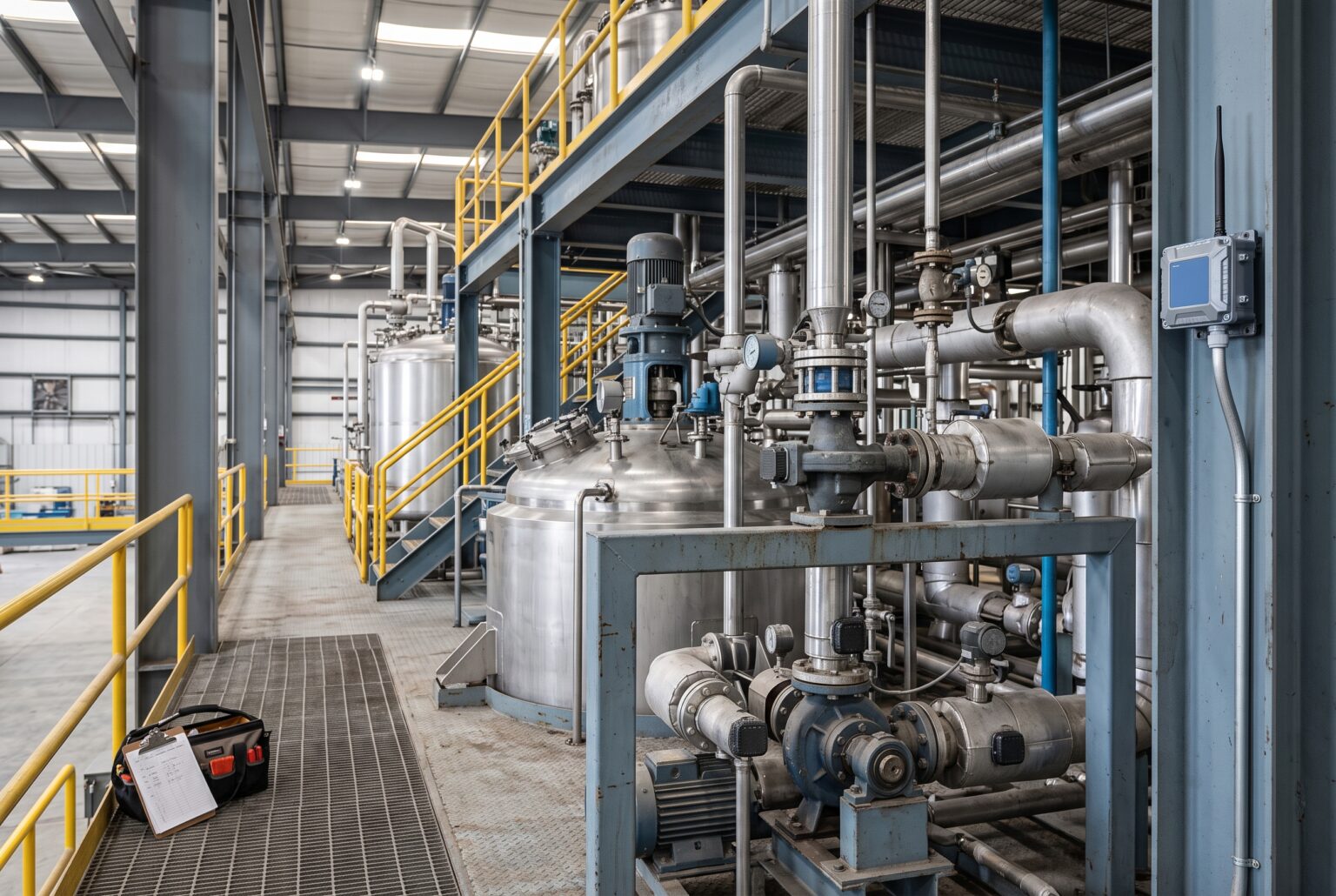
Manufacturing consistency
Why variation is costly in regulated production.
When a batch does not meet its required specification, the consequences extend well beyond the material itself: investigation, documentation, possible rework or rejection, delayed release and lost capacity.
Recorded process parameters often look similar between batches that behave differently. The explanation may lie in physical behaviour that standard records do not capture.
- Investigation and documentation effort
- Possible rework or rejected material
- Delayed batch release
- Reduced effective capacity
Physical process behaviour
What happens inside the vessel matters.
Mixing, agitation, heating, cooling and material additions all shape the outcome of a process step. Two batches run to the same recorded settings can follow different physical paths.
Measuring relevant physical behaviour, such as mixing load, temperature development or the timing of additions, can help explain why outcomes differ.
- Mixing and agitation
- How thoroughly and consistently material is combined.
- Heating and cooling
- How temperatures develop, not just their end points.
- Material additions
- Timing and conditions when materials are introduced.
- Operating conditions
- Utility supply and equipment state during the run.
Proposed investigation
Mixing consistency investigation.
In an anonymised example, the manufacturer has reported that batches produced with similar recorded settings have differed in consistency. A proposed investigation would examine candidate variables such as mixing behaviour, equipment loading, temperature history, material additions and utility conditions.
Its aim would be to identify which physical measurements help explain the variation. Any findings would require validation within the manufacturer’s own quality framework before they influenced production.
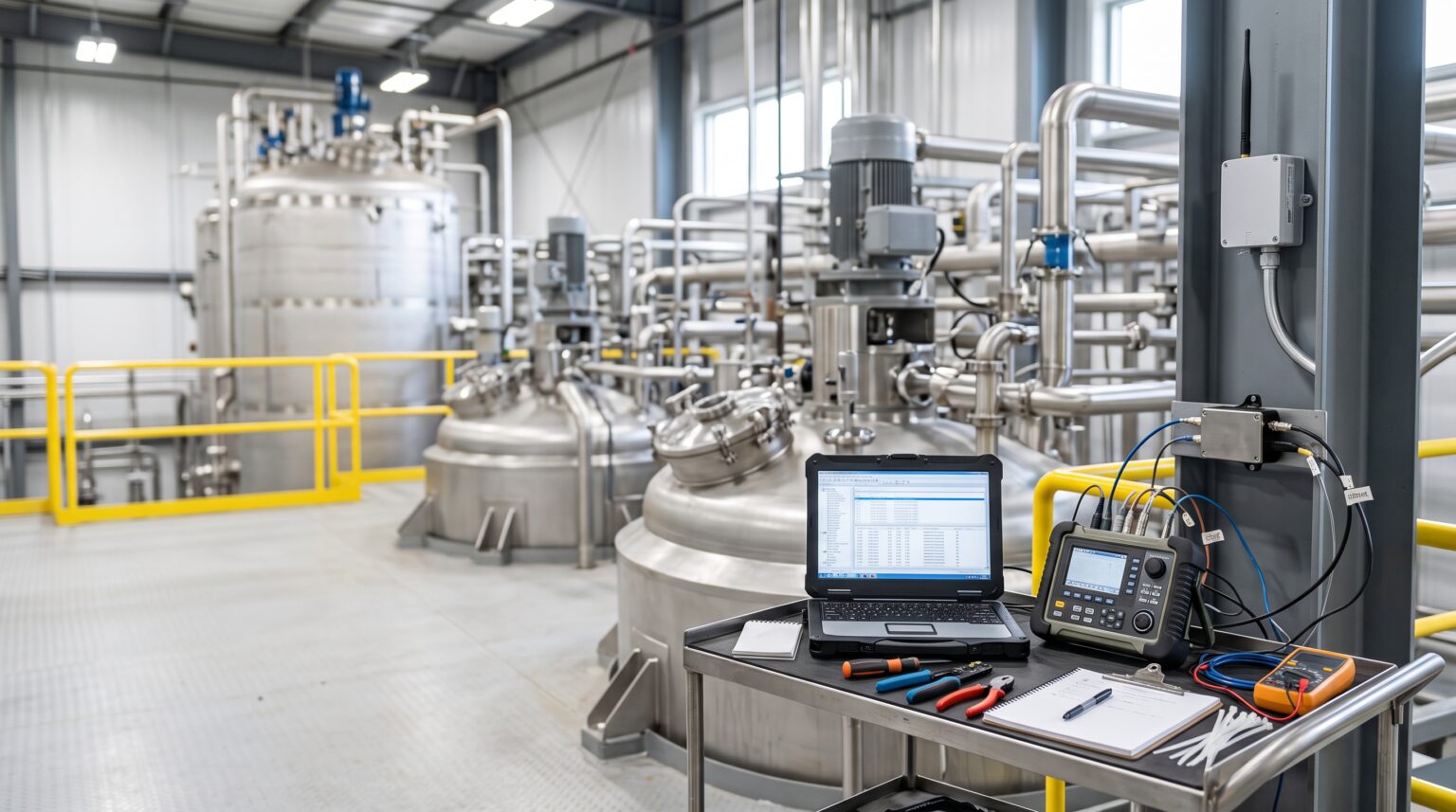
Illustrative image — not an AxioIX installation
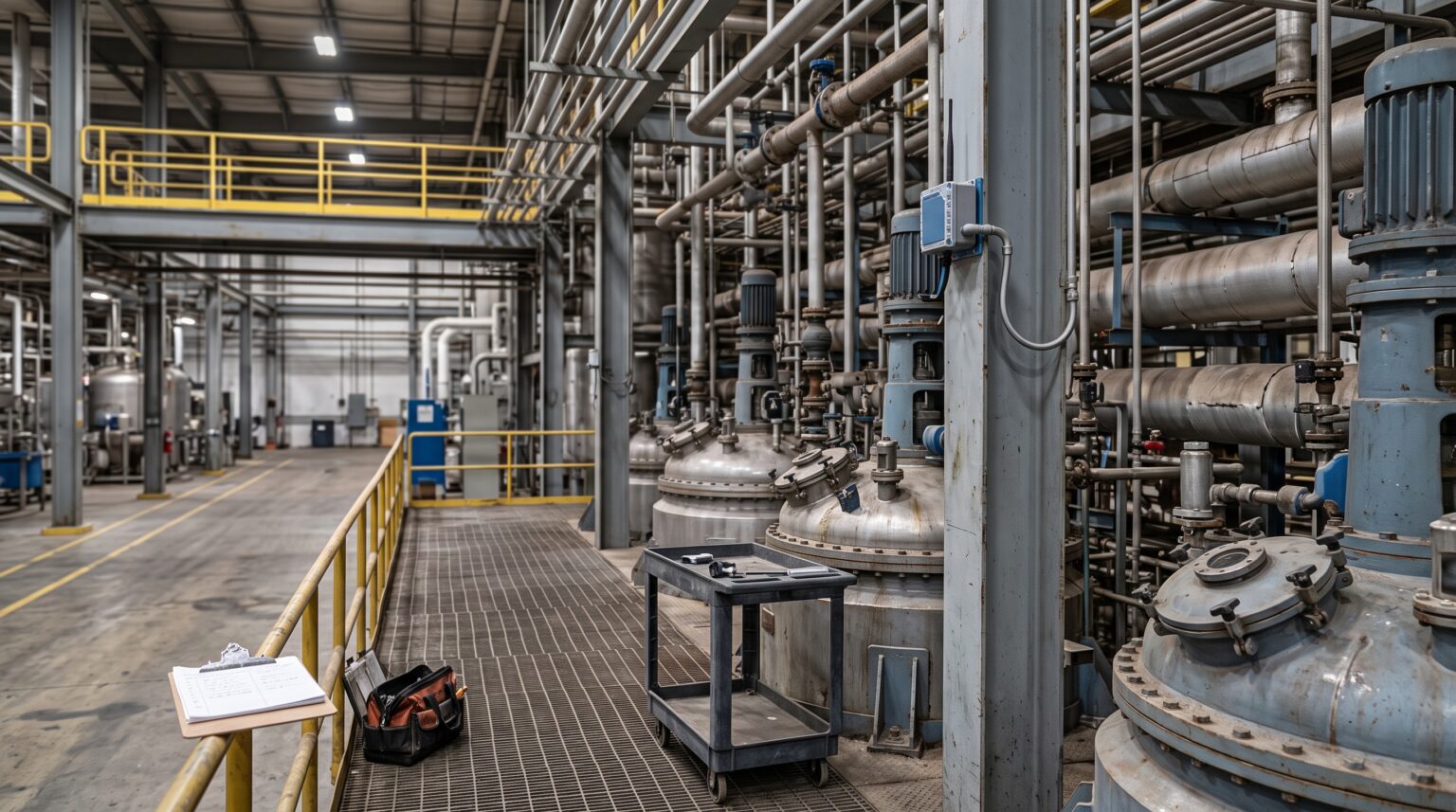
Critical utilities
Production depends on its utilities.
Chilled water, cooling, HVAC, purified water and compressed air are critical to pharmaceutical production. The pumps, motors, chillers and fans behind them often receive less attention than production equipment until something fails.
Anonymised example. A chiller-room reliability application began with a deliberately limited scope: the condition of selected pumps and motors serving the chilled-water system. The aim was to establish whether condition information was useful to the maintenance team before considering any wider application.
Manufacturing performance
Investigating variation with the right methods.
Investigation usually combines existing process records with additional measurements where they are needed, then applies engineering analysis and appropriate statistical methods. The aim is to identify candidate explanations and test them against independent outcomes.
- Existing recordsBatch and process data already held by the manufacturer.
- Additional measurementsPhysical evidence added where records are insufficient.
- Engineering analysisInterpreting behaviour in terms of the process and equipment.
- Statistical methodsTesting whether apparent relationships hold across batches.
Operating assurance
More timely operating evidence.
Continuous physical evidence can make operating information more timely, support maintenance records and help manufacturers fulfil their quality-related operating responsibilities.
Clear boundaries. Monitoring information does not itself establish product compliance, determine batch release or replace the manufacturer’s regulatory and quality authority. It is evidence that qualified people may use within established quality systems.
Current position
From proposed investigations to wider process and utility work.
Proposed investigation and enquiry
Anonymised investigation and enquiry
Opportunity
Broader process and utility applications
Discuss a pharmaceutical manufacturing question.
Talk to AxioIX about process variation, batch consistency or the reliability of your critical utilities.